Bloomsday Reading Guide
Recommendations for taking the leap

Happy Bloomsday!
If you want to take a jump into this wild book, and are feeling a little intimidated, want some cushioning, here are some ideas.
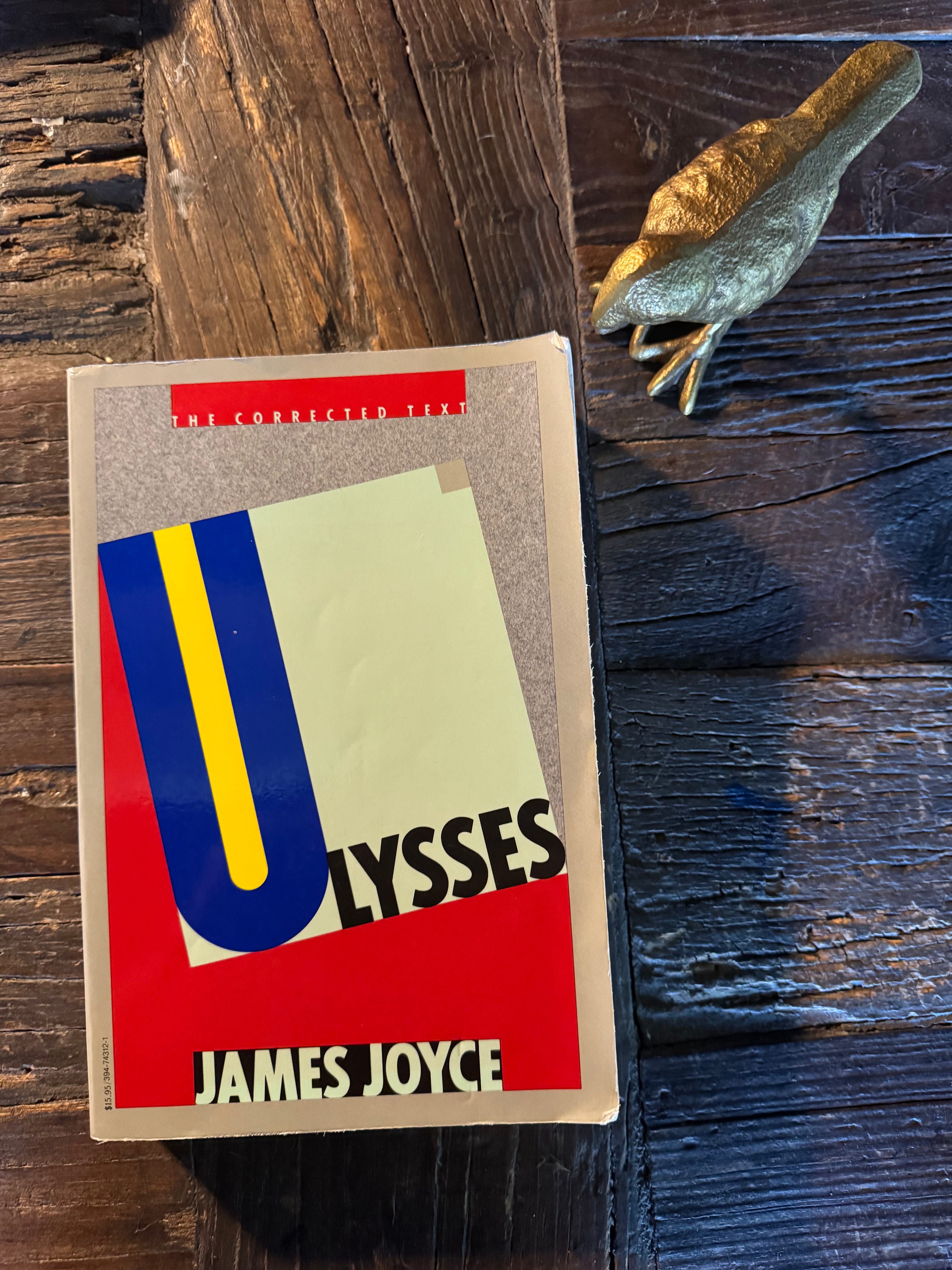
First, the book. There are some edition snobs, like there are snobs for everything. I even assume there are mustard snobs. I’ve read the corrected and uncorrected texts. I’ve found the Gabler edition is most widely available in used bookstores. You can get one for around ten bucks. You’ll probably find some notes in the margin from the previous owner. Here’s my edition. It works fine.
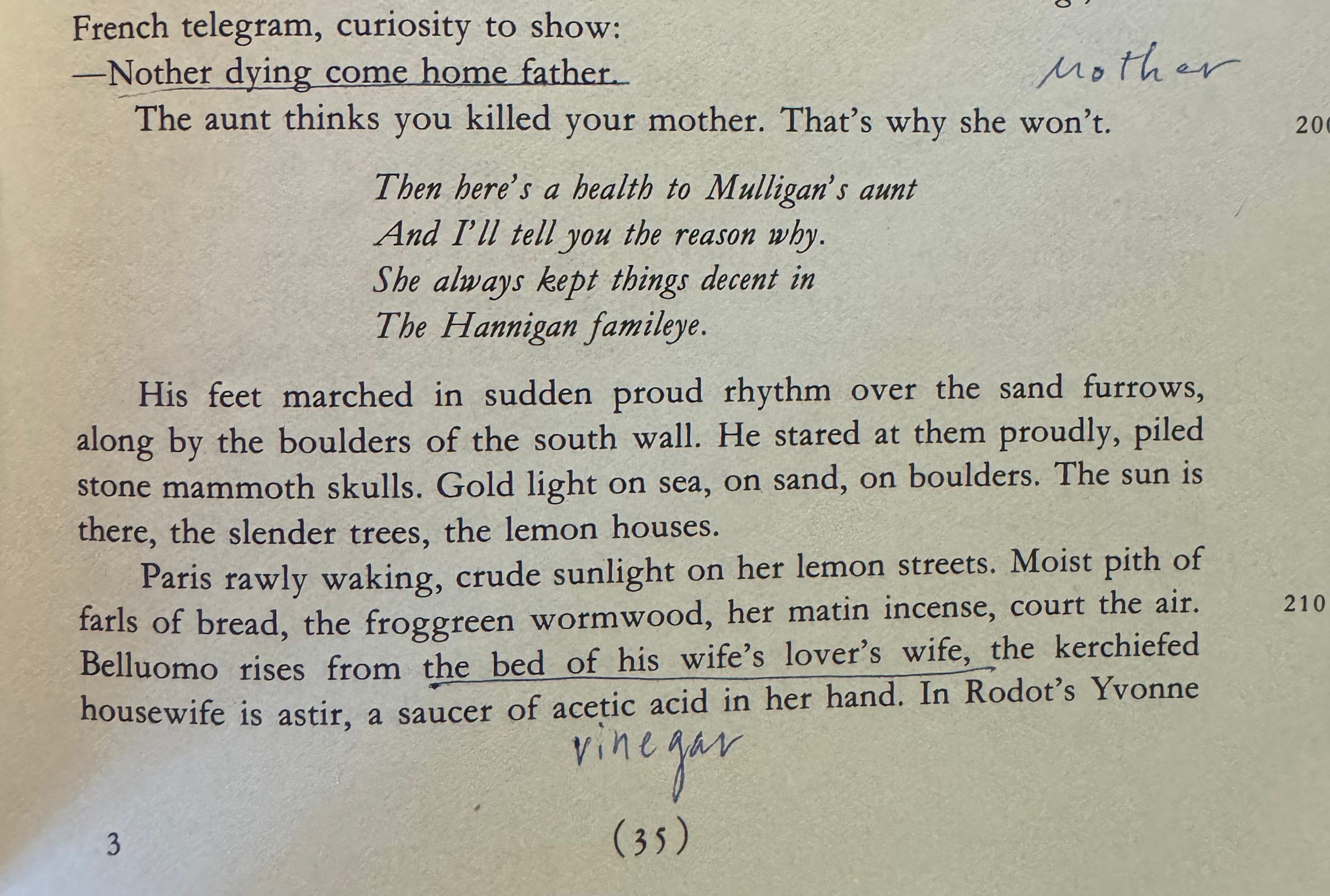
Here are some passed-down notes.
Now, I recommend reading the whole thing, fast, in a few weeks, if you can swing it, without guides or help. Enjoy the language; enjoy the confusion, get to Molly Bloom and reach the heights of the English Language. There is an entire industry devoted to Ulysses analysis. Lots of it is good and interesting! I spent the past year reading a lot of Joycean scholarship, as pedogogical prep for an upcoming seminar. A side note: I think it’s important for writers to develop expertise around an author or a book, hopefully more than one. It helps when you are asked to give craft lectures. It helps in the classroom, when you’re on the job market, when you’re writing, when you’re thinking about something to read next. Ulysses is now my professional safety blanket. I think the goal, as working writers, is to find your artistic obsessions like Saunders found the Russians, like Nabokov with just about everyone.
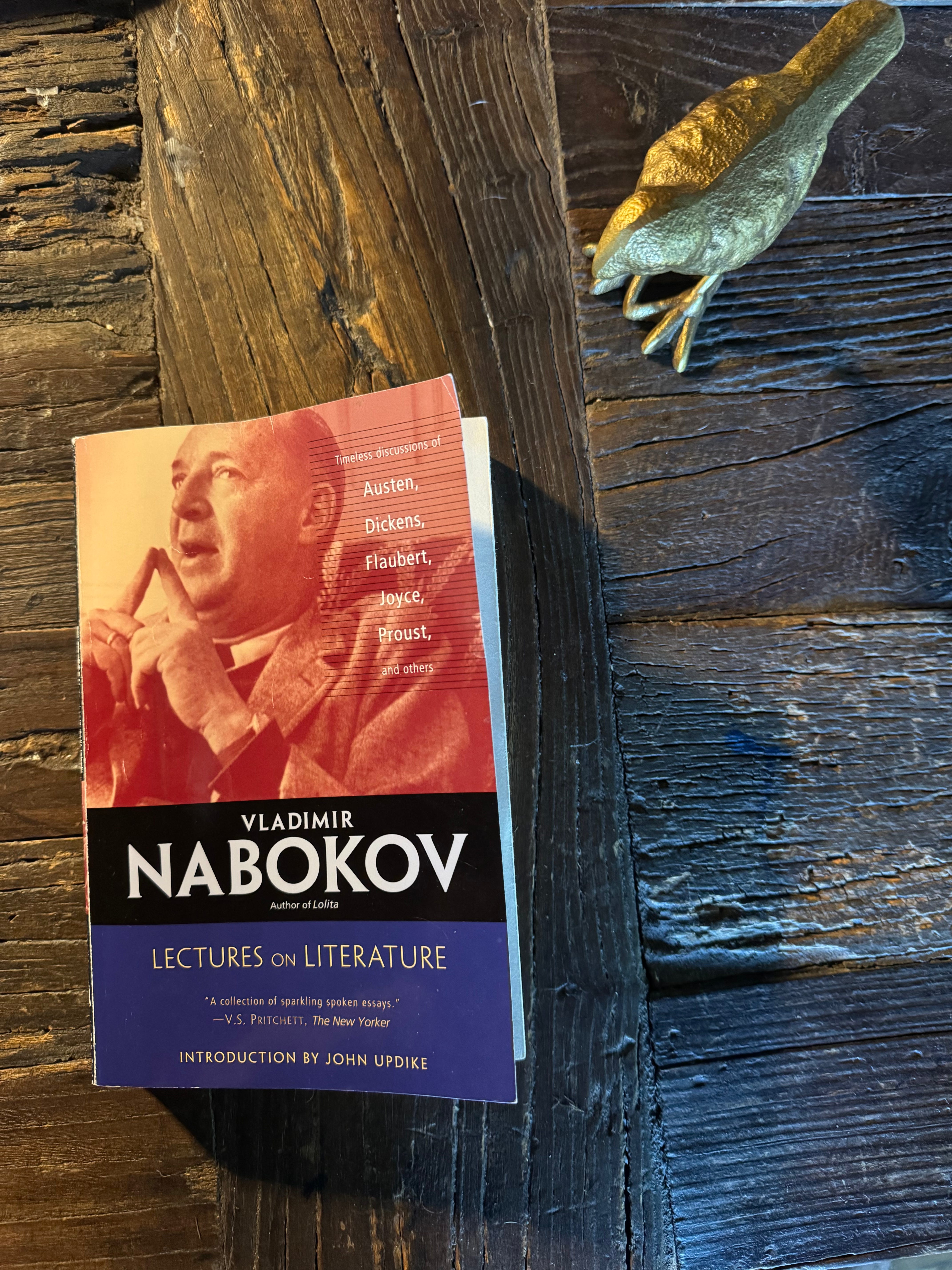
Even with the entire Ulysses guide universe, like The Bloomsday Book, the Hastings Guide, and Gilbert’s Guide, I still prefer Nabokov’s lecture over everything else. It’s passionate, funny, and clear enough to let you know where you are while reading, if you get lost. Nabokov, rightly or wrongly, dispelled any connection to Homer beyond the most superficial readings. He feels Joyce has a deeper connection to Shakespeare, which I find more compelling, from a writer’s point of view. My interests in Joyce aren’t academic or scholarly. I would not become a Joycean, if given the chance. I appreciate Nabokov’s cranky writerly gaze. Also, if you buy the book, you can use it for other classics.
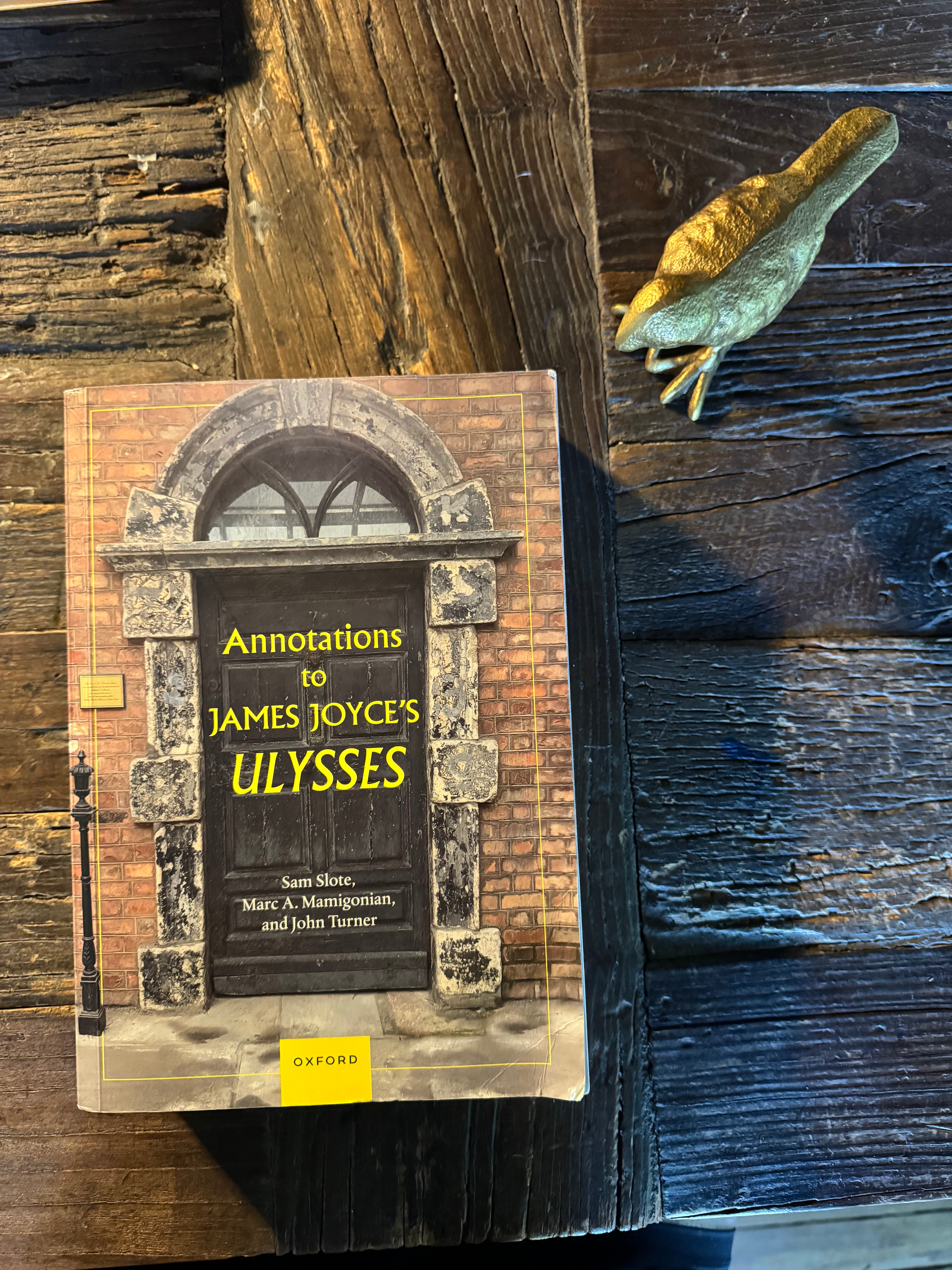
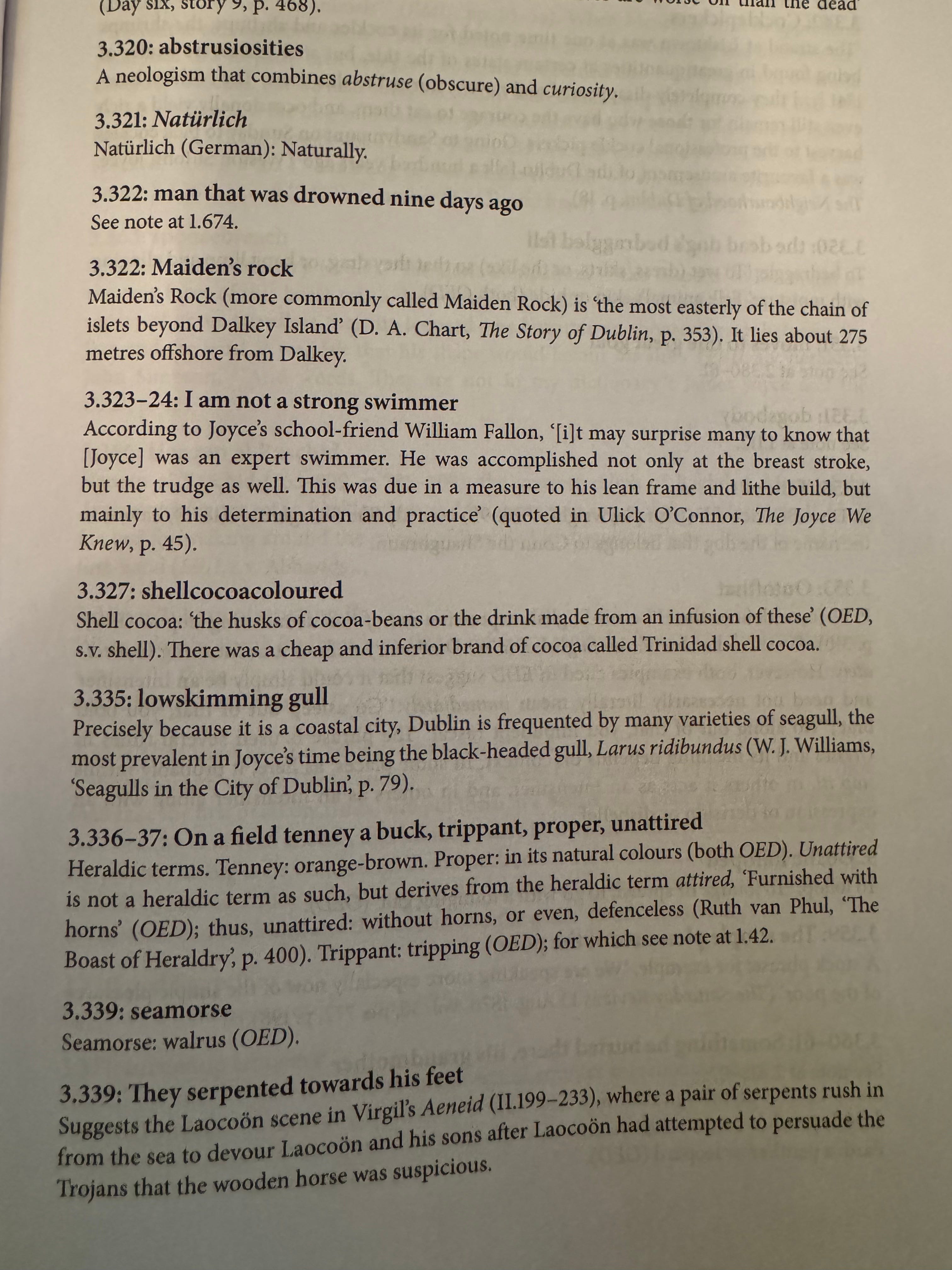
If you decide, after your first time through, maybe your second, to dive deep in Ulysses obsession, there are endless and joyful academic annotations. The Cambridge Ulysses is massive beautiful, expansive and expensive, a great collector’s edition and learning tool. I prefer, however, the Oxford Annotations. It’s fifteen hundred pages of context, more information than you could possibly need. When it goes on sale, go for it. You can read it front to back, like I’m doing. Or, you can treat it, sanely, as a reference. If you want to go crazy, go this crazy.
Here is a random page.
Finally, possibly the only book you need about Joyce, one of the best literary biographies ever written.
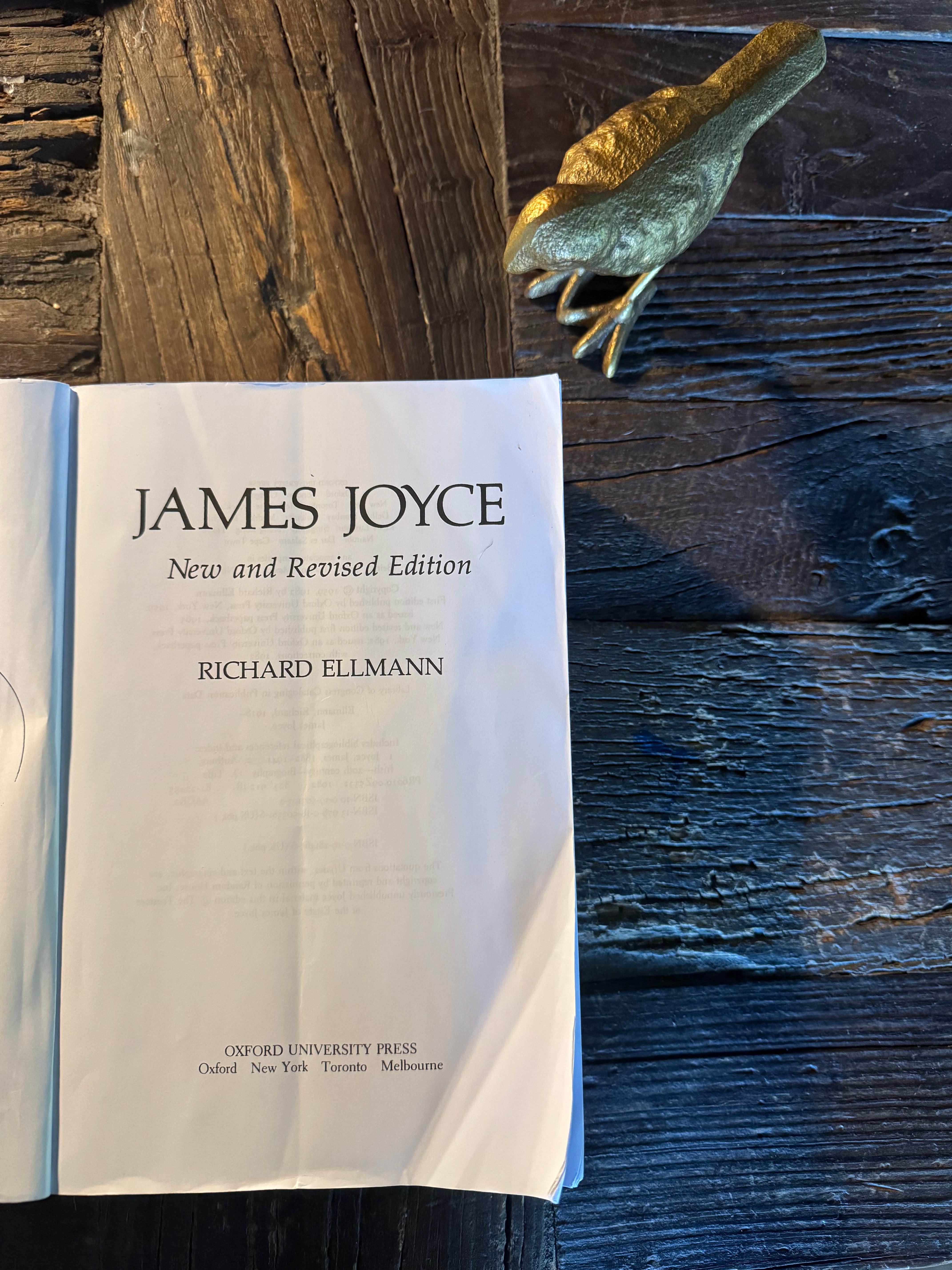
Here is my well-loved paperback with the cover ripped off through overuse. It’s funny and heartbreaking and captures Joyce’s genius without deifying him. Ellmann’s Joyce. Joy’ce post-Ulysses years, when he’s writing Finnegans Wake, losing his eyesight, dealing with his daughter’s crumbling mental health, observing Europe’s descent into Fascism from the comforts of Switzerland. I’m sure if this biography gave me a greater appreaciation for Ulysses, it did, however, without a doubt, serve as the perfect bridge between reading Ulysses and Finnegans Wake.
BOOKS TO READ AFTER ULYSSES
I have read a lot of weird books. I think these weird books speak closest to Joyce’s weirdness. They are long and bizarre and totally worth your time.
WHITE SOX UPDATE
We are really good! We won a series against the Dodgers! I am going to see them at Yankee Stadium tonight!
Going to see the Sox tomorrow at yankee stadium!